
Acute vs Chronic Pain: What Actually Works for Long-Term Pain Relief
Pain is your body's most fundamental alarm system. But when that alarm keeps ringing long after the emergency has passed — or when it rings for reasons your body cannot repair on its own — it stops being protective and starts becoming the problem itself. That distinction is the heart of the difference between acute and chronic pain.
For patients, caregivers, and anyone who has spent months or years searching for answers, understanding how these two types of pain differ is not just academic. It determines what treatments will actually work, what expectations are realistic, and why the approach that resolves a sprained ankle will fail completely for fibromyalgia or post-herpetic neuralgia.
Acute Pain vs. Chronic Pain: The Core Clinical Difference
The defining distinction between acute and chronic pain is time — but the clinical and biological differences go far deeper than duration alone.
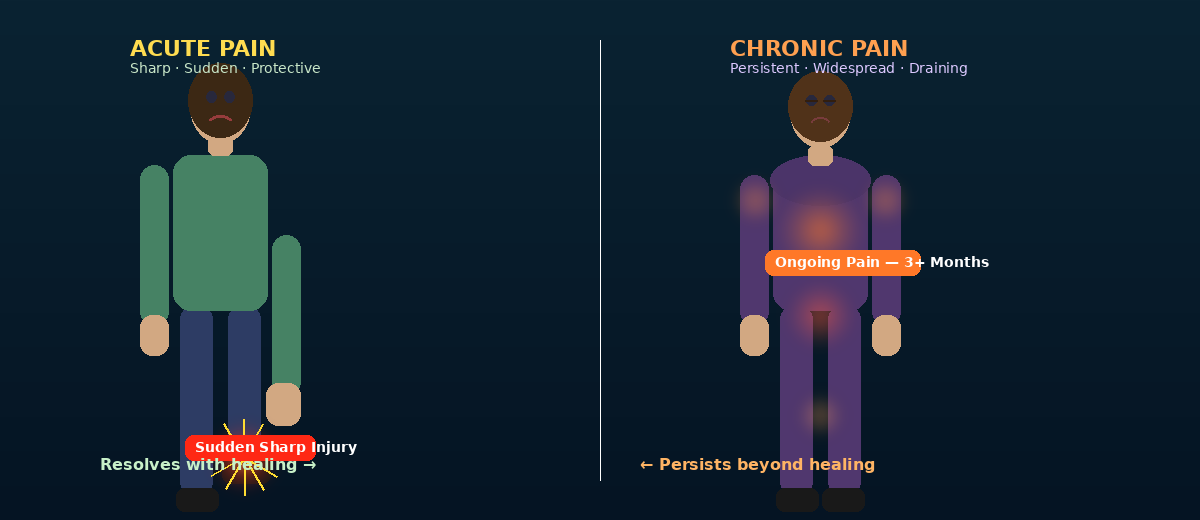
Acute pain is a normal, expected physiological response to tissue damage, injury, illness, or surgery. It serves a critical protective function: warning the body to rest, avoid further injury, and allow healing. Acute pain typically has a clear, identifiable cause, a predictable resolution timeline, and responds well to standard analgesic treatments.
Chronic pain, by contrast, persists beyond the normal healing window — generally defined as three months or longer — and often continues in the absence of identifiable ongoing tissue damage. Over time, chronic pain is associated with neuroplastic changes in the central nervous system: the pain pathways become sensitized, amplified, and self-sustaining, a process known as central sensitization.
Side-by-Side Comparison: Acute Pain vs. Chronic Pain

Causes of Acute Pain: Short-Term Pain With Identifiable Triggers
Acute pain is almost always associated with a specific, identifiable event or condition. The most common causes include:
- Traumatic injuries: Fractures, sprains, lacerations, burns, and contusions are among the most frequent causes of acute pain in emergency and urgent care settings.
- Surgical procedures: Post-operative pain is an expected form of acute pain that varies in intensity and duration depending on the procedure, individual pain sensitivity, and quality of post-surgical pain management.
- Dental pain: Toothache, abscesses, and dental procedures produce intense localized acute pain that typically resolves with treatment.
- Acute infections: Strep throat, urinary tract infections, shingles outbreaks, and ear infections all generate acute pain as part of the inflammatory response.
- Childbirth and obstetric pain: Labor pain is one of the most intense forms of acute pain, managed through a range of pharmacological and non-pharmacological interventions.
- Kidney stones and gallstones: Visceral acute pain from obstruction — particularly renal colic from kidney stones — is widely described as among the most severe pain a person can experience.
Causes of Chronic Pain: Why Some Pain Never Fully Resolves
Chronic pain can develop from a wide range of underlying conditions or arise without a clearly identifiable structural cause. Understanding the mechanism driving your chronic pain is essential for selecting effective treatment.
- Chronic knee pain: Osteoarthritis, rheumatoid arthritis, and previous joint injuries are leading causes of chronic knee pain in adults. Cartilage degeneration progressively reduces joint space and increases pain with weight-bearing activity.
- Chronic low back pain: Degenerative disc disease, spinal stenosis, facet joint arthritis, and myofascial pain syndrome are among the most frequent drivers of persistent low back pain.
- Fibromyalgia: A central sensitization syndrome characterized by widespread musculoskeletal pain, fatigue, and cognitive symptoms with no identifiable structural pathology.
- Neuropathic pain: Nerve damage from diabetes, herpes zoster (shingles), chemotherapy, or spinal compression generates ongoing burning, shooting, or electric-shock pain that is notoriously difficult to treat with standard analgesics.
- Inflammatory arthritis: Rheumatoid arthritis, psoriatic arthritis, and ankylosing spondylitis cause immune-mediated joint inflammation that produces relentless chronic pain if not adequately controlled.
- Post-surgical or post-traumatic chronic pain: A significant percentage of patients develop persistent pain following surgery or injury — particularly after procedures involving the spine, joints, or peripheral nerves.
Treating Acute Pain: What Works and Why It Cannot Simply Be Applied to Chronic Pain
Acute pain management is primarily focused on addressing the underlying cause and providing short-term analgesia while healing occurs. First-line approaches include:
Non-steroidal anti-inflammatory drugs (NSAIDs) such as ibuprofen and naproxen are highly effective for musculoskeletal acute pain by targeting the inflammatory mediators driving nociception. Acetaminophen provides central analgesia without anti-inflammatory effects. Opioid analgesics are reserved for moderate to severe acute pain — post-surgical, cancer-related, or traumatic — and should be prescribed at the lowest effective dose for the shortest necessary duration.
The critical point is that these treatments work for acute pain because the underlying cause is active and the body is capable of resolution. Applying the same pharmacological logic to chronic pain — where central sensitization has fundamentally altered how the nervous system processes pain — explains why so many patients find that standard pain medications lose effectiveness over time.
Long-Term Pain Relief for Chronic Pain: Evidence-Based Treatments That Actually Work
Chronic pain requires a fundamentally different therapeutic framework — one that addresses neurological sensitization, functional restoration, psychological resilience, and personalized pharmacotherapy simultaneously.
Multimodal Pain Management: The Gold Standard for Chronic Pain Relief
Clinical guidelines from the American Pain Society, the CDC, and the International Association for the Study of Pain consistently recommend multimodal treatment for chronic pain — meaning multiple therapies addressing different aspects of the pain experience. No single treatment is adequate for most chronic pain conditions.
Physical Rehabilitation and Graded Exercise
Exercise is one of the most consistently evidence-supported interventions for chronic pain across almost every condition studied. Graded exercise therapy, aquatic exercise, yoga, and Tai Chi all demonstrate meaningful pain reduction and functional improvement in conditions including chronic low back pain, fibromyalgia, and chronic knee pain.
Cognitive Behavioral Therapy and Pain Psychology
Chronic pain is processed in the same brain regions that handle emotion, memory, and threat perception. CBT for chronic pain teaches patients to identify and modify unhelpful thought patterns, develop pacing strategies, and gradually expand functional capacity. It is one of the most rigorously evidence-based treatments available for chronic pain.
Compounded Pain Medications for Long-Term Chronic Pain Relief
For patients who have not found adequate relief through commercially available medications — or who experience significant side effects from standard formulations — compounded pain medications represent a powerful, personalized option. Compounding pharmacies can formulate:
- Topical transdermal pain creams: Custom combinations of ketamine, gabapentin, lidocaine, diclofenac, baclofen, and other agents applied directly to the painful area. These formulations bypass the gastrointestinal system entirely, reducing systemic side effects while delivering concentrated analgesia to the target tissue.
- Personalized oral pain formulations: Doses and ingredient combinations adjusted to the patient's specific pain mechanism and tolerability profile, without fillers or excipients that trigger adverse reactions.
- Low-dose naltrexone (LDN): An emerging compounded treatment with growing evidence for fibromyalgia, inflammatory conditions, and central sensitization syndromes — available through compounding pharmacies at doses far below those used for addiction treatment.
Conclusion: Acute Pain Heals — Chronic Pain Requires a New Approach
The distinction between acute and chronic pain is not merely about how long the pain lasts. It reflects a fundamental difference in biology, in the mechanisms driving the pain experience, and in what treatments will be effective. Treating chronic pain like acute pain — expecting that rest, anti-inflammatories, and time will resolve it — is one of the most common and costly mistakes in pain management.
Effective long-term pain relief for chronic pain requires a commitment to multimodal treatment: movement-based therapies, psychological support, appropriate pharmacotherapy, and in many cases, the kind of personalized medication formulation that only a compounding pharmacy can provide. If you or someone you care for has been living with chronic pain that has not responded to standard treatments, it is time to explore a more individualized path forward.
Contact our compounding pharmacy team to discuss how personalized pain formulations can be integrated into your comprehensive chronic pain management plan.
Frequently Asked Questions: Acute vs. Chronic Pain
Q: How do doctors determine if pain is acute or chronic?
A: The primary distinction is duration. Pain lasting less than three months is generally classified as acute; pain persisting beyond three months is chronic. Physicians also assess whether the pain is proportionate to identifiable tissue damage, whether it has central sensitization features, and whether psychological factors are contributing to the pain experience.
Q: Can acute pain turn into chronic pain?
A: Yes — and this is a significant clinical concern. Approximately 10–30% of acute pain cases transition to chronic pain, particularly following surgery, injury, or herpes zoster infection. Early, adequate treatment of acute pain — including appropriate analgesia and early mobilization — reduces the risk of this transition.
Q: What is the most effective treatment for chronic pain?
A: There is no single most effective treatment because effectiveness depends on the type of chronic pain, its underlying mechanism, and the individual patient. Multimodal treatment combining physical therapy, CBT, and carefully selected pharmacotherapy — including compounded medications when appropriate — produces the best outcomes across most chronic pain conditions.
Q: Is chronic pain all in your head?
A: No — but the brain is involved. Chronic pain involves real, measurable neurological changes including central sensitization, altered brain connectivity, and dysregulation of descending pain inhibitory pathways. These are biological changes, not psychological fabrication. However, because the brain processes pain, psychological interventions genuinely change the pain experience — which is why they are a legitimate part of treatment, not a suggestion that the pain is imaginary.
Q: What is chronic pain vs. acute pain in simple terms?
A: Acute pain is your body's alarm system — it warns you about damage and resolves when healing is complete. Chronic pain is when that alarm gets stuck, continuing to signal pain even after the original injury has healed or when there is no clear ongoing tissue damage.
Q: Can compounded medications help when standard pain drugs have failed?
A: Yes. Compounded medications offer combinations, delivery methods, and formulations not available commercially. For patients whose chronic pain has not responded adequately to standard treatments, a compounded topical cream, personalized oral formulation, or low-dose naltrexone preparation may provide meaningful relief. Always work with a licensed physician and PCAB-accredited compounding pharmacy.