
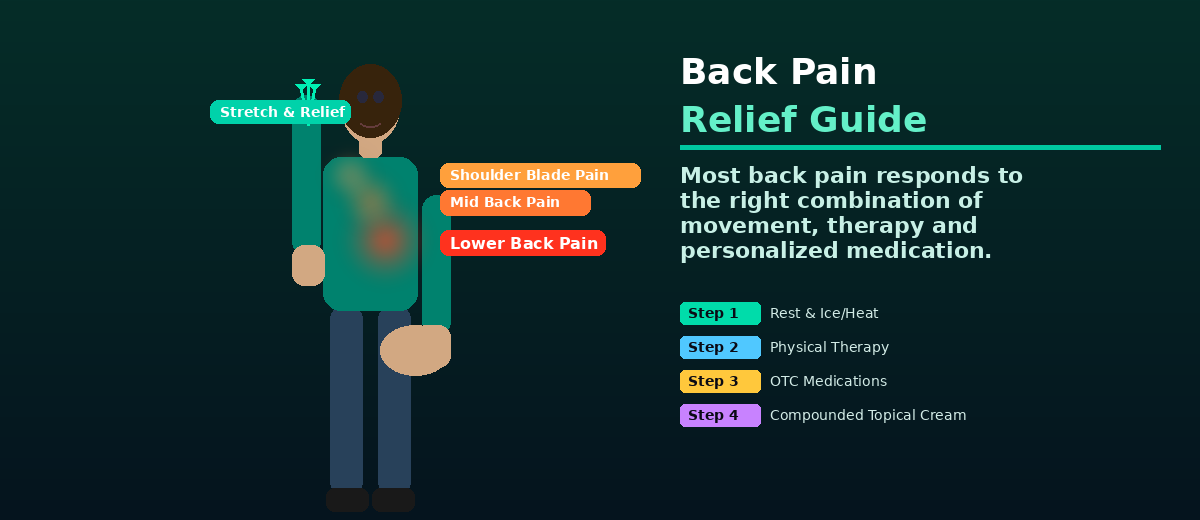
Back Pain Relief That Actually Works: A Guide to Severe Pain
Back pain is not a single condition — it is a collection of distinct clinical problems that happen to share a common location. A patient searching for back pain relief after a lumbar muscle strain needs an entirely different treatment approach than someone dealing with thoracic disc compression or chronic mid-back pain from poor posture. Yet too often, patients are handed a generic prescription or told to rest, only to find that neither resolves the underlying problem.
This guide is written for patients who are ready to move past generic advice. Whether you are dealing with lower back pain that radiates into your leg, persistent middle back pain between the shoulder blades, or chronic upper back tension, here is a clear, evidence-based roadmap to the treatments that actually work — and why personalized options like compounded pain therapy may be the solution you have not yet tried.
Why Generic Back Pain Treatments Often Fail: Understanding the Root Cause First
One of the most important things to understand about back pain is that the same symptom — aching, stiffness, or sharp pain in the back — can have radically different underlying causes. Treating all back pain the same way is the most common reason patients cycle through treatments without finding lasting relief.
Inflammation-driven pain requires anti-inflammatory strategies. Nerve compression requires decompression and neuropathic pain medications. Myofascial pain responds best to movement, stretching, and soft tissue therapy. Structural instability requires rehabilitation and stabilization. Without identifying which mechanism is driving your back pain, even the most aggressive treatments will produce inconsistent, temporary results.
Effective Lower Back Pain Relief: From Conservative Care to Advanced Options
Lower back pain — affecting the lumbar spine below the rib cage — is the most prevalent form of back pain, responsible for more disability claims and medical visits than any other musculoskeletal condition. The good news is that the vast majority of lower back pain cases respond well to structured, progressive treatment — provided the right approach is matched to the right cause.
First-Line Lower Back Pain Relief Options
- Active movement over bed rest: Decades of clinical research have confirmed that bed rest worsens most lower back pain conditions. Gentle, progressive movement — walking, light swimming, or guided stretching — activates the lumbar stabilizing muscles, reduces inflammation, and promotes disc health. Start moving as early as pain allows.
- Ice and heat therapy: Ice therapy for the first 48–72 hours reduces acute inflammation and numbs sharp pain. After the initial inflammatory phase, heat therapy relaxes muscle spasm, increases blood flow, and relieves stiffness. Alternating ice and heat is beneficial for subacute and chronic lower back pain.
- Over-the-counter anti-inflammatories: NSAIDs such as ibuprofen (400–600mg every 6–8 hours) and naproxen are among the most effective short-term treatments for inflammatory lower back pain. They should be taken with food and used for the shortest necessary duration due to gastrointestinal, cardiovascular, and renal risks.
- Topical diclofenac gel: Applied directly to the lower back, topical diclofenac delivers localized anti-inflammatory relief with significantly less systemic absorption than oral NSAIDs — making it particularly suitable for older patients, those with cardiovascular risk, or patients on blood thinners.
Physical Therapy and Targeted Exercise for Lower Back Pain Relief
Physical therapy is one of the most effective and durable treatments for lower back pain, particularly for recurrent or chronic presentations. A physiotherapist assesses the specific mechanical dysfunction driving your pain and designs an individualized program targeting lumbar stabilization, hip mobility, hamstring flexibility, and core strength.
The McKenzie Method, directional preference exercises, and motor control training have all demonstrated strong evidence for reducing lower back pain and preventing recurrence. The key is consistency — patients who commit to their exercise program for 8–12 weeks achieve meaningfully better long-term outcomes than those who rely on passive treatments alone.
Prescription Treatments for Persistent Lower Back Pain
When conservative measures provide insufficient relief, physicians may prescribe:
- Muscle relaxants (cyclobenzaprine, methocarbamol): Effective for acute lower back pain with significant muscle spasm. Typically prescribed for short durations due to sedation and dependence risk.
- Nerve pain medications (gabapentin, duloxetine): Indicated when lower back pain has a neuropathic component — such as sciatica or radiculopathy — where standard anti-inflammatories are ineffective.
- Epidural steroid injections: For lower back pain caused by nerve root compression or spinal stenosis, epidural corticosteroid injections can provide 3–6 months of meaningful pain reduction, facilitating participation in physical therapy.
- Radiofrequency ablation: For lower back pain originating from facet joints, radiofrequency ablation of the medial branch nerves can provide 12–24 months of significant relief.
Middle Back Pain Relief: Treating the Most Overlooked Region of the Spine
The thoracic spine — spanning from the base of the neck to the bottom of the rib cage — is the most stable and least mobile section of the vertebral column. Its stability protects the heart, lungs, and major vessels housed within the thoracic cage. This same stability means thoracic injuries are less common — but when middle back pain does develop, it often goes undertreated because clinicians less frequently investigate this region.
Most Effective Treatments for Middle Back Pain
- Postural correction and ergonomic modification: The most frequent cause of middle back pain in working-age adults is sustained poor posture — particularly forward head posture and thoracic kyphosis from desk work. Ergonomic chair adjustments, monitor height optimization, and regular positional breaks are foundational interventions.
- Thoracic mobility exercises: The thoracic spine naturally loses mobility with age and inactivity. Targeted thoracic extension exercises, foam roller mobilizations, and rotational stretches restore range of motion, reduce joint stiffness, and relieve muscular tension in the mid back.
- Manual therapy (chiropractic and osteopathic manipulation): Thoracic spinal manipulation is one of the most evidence-supported treatments for acute and subacute middle back pain. A skilled chiropractor or osteopathic physician can restore joint mobility and significantly reduce pain intensity within a small number of sessions.
- Treating underlying systemic causes: When middle back pain is secondary to a systemic condition — such as osteoporosis, kidney disease, or GERD — treating the primary condition is essential for lasting relief.
-
Pain Between the Shoulder Blades Relief: Targeted Solutions for Interscapular Pain

Interscapular pain — between the shoulder blades — responds differently to treatment depending on its underlying cause. Once serious referred pain from cardiac, biliary, or esophageal sources has been ruled out, the following targeted strategies are most effective:
- Rhomboid and trapezius strengthening: Weakness in the muscles between the shoulder blades — particularly the rhomboids and lower trapezius — is a primary driver of interscapular pain in desk workers and individuals with rounded-shoulder posture. Targeted resistance exercises (prone Y-T-W raises, seated rows, face pulls) progressively correct the postural imbalance.
- Trigger point release: Myofascial trigger points in the rhomboids, infraspinatus, and thoracic erector spinae muscles are a common source of persistent interscapular pain. Trigger point dry needling, massage therapy, or self-massage with a tennis ball can provide significant relief.
- Addressing acid reflux: For patients whose interscapular pain is related to GERD, optimizing reflux management — dietary modification, proton pump inhibitors, and positional changes — often eliminates the referred back pain entirely.
- Compounded topical muscle relaxant creams: For patients with chronic interscapular muscle tension and spasm, a compounded topical cream containing cyclobenzaprine, diclofenac, and lidocaine applied to the affected area provides targeted muscle relaxation and anti-inflammatory relief without the systemic sedation of oral muscle relaxants.
Compounded Back Pain Medications: Personalized Relief When Standard Treatments Fall Short
For patients who have worked through the standard treatment pathway without achieving adequate relief, compounded pain medications offer a genuinely different approach. Rather than fitting the patient to what is commercially available, compounding pharmacies formulate medications around the patient's specific pain mechanism, medication tolerability, and clinical needs.
The most clinically relevant compounded formulations for back pain include:
- Multi-agent transdermal pain creams: A single topical preparation combining diclofenac (anti-inflammatory), cyclobenzaprine (muscle relaxant), gabapentin (neuropathic pain), and lidocaine (local anesthetic) targets multiple pain mechanisms simultaneously at the site of pain — with minimal systemic absorption and side effects.
- Ketamine-based topical formulations: For patients with central sensitization or refractory chronic back pain, low-concentration topical ketamine can modulate NMDA receptor activity and provide meaningful analgesia where standard agents have failed.
- Allergen-free oral pain formulations: Patients who react to dyes, lactose, gluten, or other excipients in commercial pain medications can receive the same active ingredients in a clean, custom compounded capsule.
- Low-dose naltrexone (LDN): An emerging compounded therapy with growing evidence for reducing neuroinflammation and central sensitization in chronic back pain conditions — available through compounding pharmacies at doses far below those used for addiction treatment.
These preparations are developed in partnership with your prescribing physician and prepared by a licensed, accredited compounding pharmacy. They are not a first-line treatment — they are a sophisticated, personalized solution for patients whose needs cannot be met by what sits on a pharmacy shelf.
Conclusion: Real Back Pain Relief Starts With the Right Diagnosis and a Personalized Plan
Lower back pain, middle back pain, and pain between the shoulder blades will not resolve through wishful thinking, generic advice, or an endless cycle of temporary pain relief. Real, lasting improvement comes from understanding the specific mechanism driving your pain, engaging the most effective evidence-based treatments for that mechanism, and being willing to pursue personalized solutions when standard approaches are insufficient.
Whether you are at the beginning of your back pain journey or have been struggling for years, the path forward is the same: accurate diagnosis, targeted treatment, progressive rehabilitation, and — where appropriate — the kind of individualized pharmacotherapy that only a compounding pharmacy can provide.
Our pharmacy team partners with your physician to create back pain relief solutions tailored specifically to you. Contact us today to learn how a customized compounded formulation could be the missing piece in your pain management plan.
Frequently Asked Questions: Back Pain Relief
Q: What is the fastest way to relieve lower back pain?
A: For acute muscle-related lower back pain, the fastest relief typically comes from a combination of topical diclofenac gel (applied directly to the painful area), an oral NSAID such as ibuprofen, gentle movement to avoid stiffness, and ice or heat therapy depending on the phase of injury. For nerve-related lower back pain, these approaches are less effective and medical evaluation is recommended.
Q: What causes middle back pain between the shoulder blades?
A: The most common causes are postural strain from prolonged sitting or desk work, myofascial trigger points in the rhomboid and trapezius muscles, thoracic spine joint dysfunction, and referred pain from the gallbladder or esophagus. If middle back pain is sudden, severe, or accompanied by chest or abdominal symptoms, seek medical evaluation to rule out cardiac or visceral causes.
Q: Can poor posture cause permanent back pain?
A: Chronic poor posture does not typically cause permanent structural damage in younger adults but can create persistent muscle imbalances, joint stiffness, and chronic pain patterns that become progressively harder to reverse if left unaddressed. The sooner postural correction and rehabilitative exercise are initiated, the faster and more completely the pain resolves.
Q: Are compounded topical creams effective for back pain?
A: Yes — compounded topical pain creams have demonstrated meaningful clinical benefit for localized back pain, particularly for patients who cannot tolerate oral medications or who have not responded to single-agent topical treatments. Multi-ingredient compounded formulations can target multiple pain mechanisms simultaneously at the site of pain, reducing inflammation, muscle spasm, and neuropathic signals concurrently.
Q: How long does it take for back pain to go away?
A: Acute back pain from muscle strain typically resolves within 4–6 weeks with appropriate management. Subacute back pain (6–12 weeks) usually responds well to physical therapy and medication. Chronic back pain (over 12 weeks) requires a more comprehensive, multimodal approach and realistic expectations — significant improvement is achievable, but complete resolution is not guaranteed for all conditions.
Q: When is back pain serious enough to require surgery?
A: Surgery is considered for back pain when: there is progressive neurological deficit (worsening weakness or numbness in the legs), cauda equina syndrome (loss of bowel or bladder control), structural instability that cannot be managed conservatively, or severe, refractory pain from conditions such as spinal stenosis or disc herniation that has not responded to at least 6–12 weeks of comprehensive conservative treatment.
Q: What is the difference between lower back pain and kidney pain?
A: Kidney pain typically presents as a dull, constant ache located higher than the lumbar spine — in the costovertebral angle, just below the rib cage. It is often accompanied by urinary symptoms, fever, or nausea. Lower back musculoskeletal pain is usually located in the lumbar spine, varies with position and movement, and is reproduced with palpation of the back muscles or spinal structures.