
Chronic Pain in Adults: Types, Treatments, and Recommended Medications
Chronic pain is one of the most prevalent and undertreated health conditions in adults worldwide. Unlike acute pain — which serves as a warning signal and resolves as the body heals — chronic pain persists long after its original cause, often lasting three months or more and significantly affecting every dimension of a person's life.
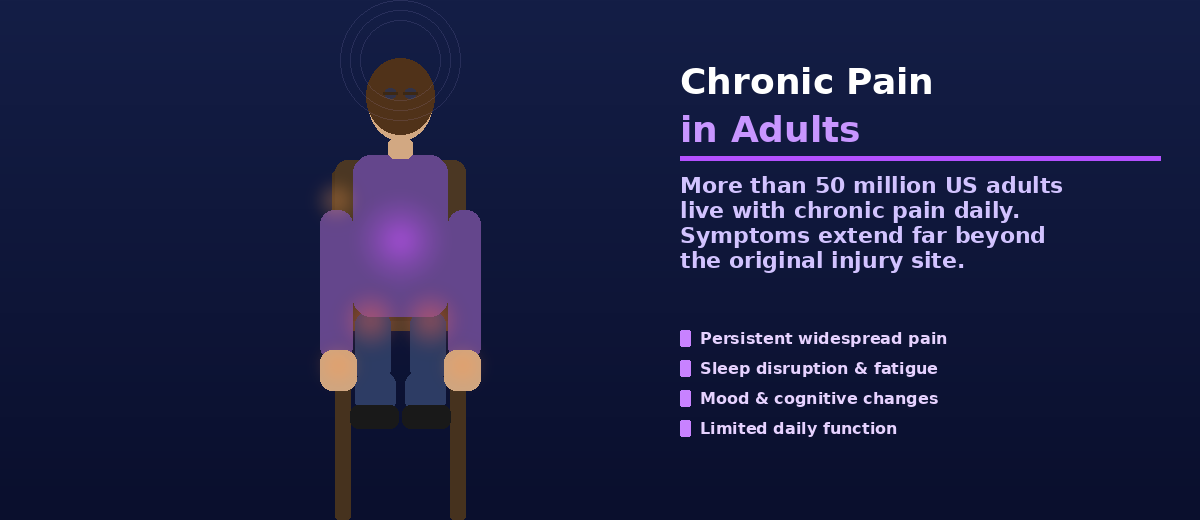
According to the CDC, more than 50 million adults in the United States experience chronic pain, with approximately 17 million reporting high-impact chronic pain that limits daily activity on most days. For caregivers and patients navigating this reality, understanding the types of chronic pain, the treatment landscape, and when personalized care becomes necessary is essential.
What Is Chronic Pain? Definition, ICD-10 Classification, and How It Differs From Acute Pain
Chronic pain is clinically defined as pain that persists beyond the normal tissue healing time — typically three months or longer — or pain associated with a chronic health condition such as arthritis, fibromyalgia, or neuropathy. It may be continuous or intermittent, mild or severe, and can occur throughout the body.
Chronic Pain ICD-10 Codes: What They Mean for Patients and Caregivers
In the ICD-10-CM classification system, chronic pain is coded under several categories depending on the underlying condition and location. The most commonly used codes include:
- G89.29 — Other chronic pain: A general code used when chronic pain does not fit a more specific category.
- G89.21 — Chronic pain due to trauma: Assigned when ongoing pain results from a previous physical injury.
- G89.28 — Other chronic postprocedural pain: Used for persistent pain following a surgical procedure.
- G89.4 — Chronic pain syndrome: Reserved for cases where chronic pain is associated with significant psychological and functional impairment.
- M54.5 — Low back pain: One of the most frequently assigned codes in primary care settings.
Understanding your ICD-10 code matters because it directly affects insurance coverage, treatment authorization, and the types of medications your physician can prescribe or a compounding pharmacy can prepare.
Chronic Pain Examples: Real Conditions That Cause Long-Term Pain in Adults
Chronic pain is not a single diagnosis — it is a symptom that underlies dozens of conditions. Here are the most common chronic pain examples encountered in adult patients:
- Chronic knee pain: Affecting approximately 25% of adults, chronic knee pain most commonly results from osteoarthritis, rheumatoid arthritis, patellofemoral syndrome, or previous injury. It is one of the leading causes of disability in older adults.
- Fibromyalgia: A widespread musculoskeletal pain condition characterized by fatigue, sleep disturbances, cognitive difficulty, and tenderness at multiple body sites. It affects an estimated 4 million US adults.
- Chronic low back pain: Persistent pain in the lumbar region lasting more than 12 weeks, often stemming from disc degeneration, facet joint arthritis, or spinal stenosis.
- Neuropathic pain (diabetic peripheral neuropathy): Burning, tingling, or shooting pain in the feet and legs caused by nerve damage from poorly controlled diabetes — one of the most debilitating forms of chronic pain.
- Chronic migraine: Defined as 15 or more headache days per month, with at least 8 meeting migraine criteria. Chronic migraine significantly impairs work and social functioning.
- Endometriosis-related pelvic pain: Affecting approximately 10% of women of reproductive age, endometriosis causes chronic pelvic pain that often goes undiagnosed for years.
- Chronic pain after cancer treatment: Post-surgical pain, chemotherapy-induced neuropathy, and radiation-related tissue damage can produce lasting chronic pain in cancer survivors.
Chronic Pain Treatments: A Comprehensive Guide to Evidence-Based Pain Management

There is no single treatment that eliminates chronic pain for every patient. Effective chronic pain management is multimodal — meaning it combines physical, psychological, pharmacological, and lifestyle-based strategies tailored to the individual. Here is a comprehensive overview of current evidence-based options:
1. Physical and Rehabilitative Therapies
Physical therapy remains one of the most effective and durable treatments for chronic musculoskeletal pain. A qualified physiotherapist can design a program of targeted strengthening, flexibility, and neuromuscular retraining exercises that address the root cause of pain rather than masking symptoms. Aquatic therapy, occupational therapy, and graded exercise therapy are also valuable for patients with severe functional limitations.
2. Psychological and Behavioral Approaches
Chronic pain has a profound psychological dimension. Cognitive Behavioral Therapy (CBT) is the most evidence-supported psychological intervention for chronic pain, helping patients restructure negative pain-related thoughts, develop coping strategies, and improve functional activity. Mindfulness-Based Stress Reduction (MBSR) and Acceptance and Commitment Therapy (ACT) have also demonstrated meaningful reductions in pain intensity and disability.
3. Pharmacological Treatments for Chronic Pain
Medication management for chronic pain requires careful selection based on pain type, comorbidities, and patient history. Common pharmacological approaches include:
- NSAIDs and acetaminophen: Appropriate for mild to moderate musculoskeletal pain. Long-term use requires monitoring for gastrointestinal, renal, and cardiovascular risks.
- Antidepressants (SNRIs and TCAs): Duloxetine and tricyclic antidepressants have demonstrated efficacy for neuropathic pain, fibromyalgia, and chronic low back pain independent of their antidepressant effects.
- Anticonvulsants (gabapentin, pregabalin): First-line pharmacotherapy for neuropathic pain conditions including diabetic neuropathy and post-herpetic neuralgia.
- Opioids: Reserved for severe, refractory chronic pain when other treatments have failed. Require careful monitoring due to risks of dependence and adverse effects.
- Topical agents: Lidocaine patches, diclofenac gel, and capsaicin cream provide localized relief with minimal systemic absorption — ideal for patients who cannot tolerate oral medications.
4. Interventional Pain Procedures
For patients who do not achieve adequate relief through conservative measures, interventional procedures may offer significant benefit. These include epidural steroid injections, nerve blocks, radiofrequency ablation, spinal cord stimulation, and trigger point injections — each targeting specific pain generators in the nervous system or musculoskeletal structure.
5. Compounded Pain Medications: Personalized Pharmacotherapy for Complex Chronic Pain
Patients with complex chronic pain often present with multiple pain mechanisms, medication intolerances, or comorbidities that make standard pharmaceutical options inadequate. Compounded medications offer a powerful solution — allowing physicians and pharmacists to design a treatment formulation built around the patient's specific needs rather than fitting the patient to a commercially available product.
A licensed compounding pharmacy can prepare transdermal pain creams combining ingredients such as ketamine, amitriptyline, lidocaine, and gabapentin — delivering multi-mechanism pain relief directly to the affected tissue with minimal systemic absorption. For caregivers managing a family member with chronic pain, these formulations also simplify administration and improve adherence significantly.
Conclusion: Managing Chronic Pain in Adults Requires More Than a One-Size-Fits-All Approach
Chronic pain in adults is not a single disease — it is a complex, multidimensional condition that demands individualized, evidence-based management. Whether the cause is chronic knee pain, fibromyalgia, diabetic neuropathy, or post-surgical pain, the most effective outcomes come from a treatment plan that addresses the physical, psychological, and pharmacological dimensions of the condition simultaneously.
For caregivers supporting a loved one through chronic pain, understanding the types of pain, the available treatments, and the options for personalized pharmacotherapy can make a profound difference in quality of life. For patients who have struggled with inadequate pain control through standard medications, compounded pain therapy — developed in partnership with your physician and a PCAB-accredited compounding pharmacy — may offer the targeted, customized relief that has been out of reach.
Reach out to our compounding pharmacy team today to learn how personalized pain medication formulations can be part of your comprehensive pain management plan.
Frequently Asked Questions About Chronic Pain in Adults
Q: What qualifies as chronic pain?
A: Chronic pain is generally defined as pain lasting three months or longer, persisting beyond the expected healing time for an injury or illness. It may be constant or intermittent, and can exist with or without a clearly identifiable ongoing cause.
Q: What are the most common chronic pain examples in adults?
A: The most common types include chronic low back pain, chronic knee pain, fibromyalgia, neuropathic pain from diabetes, chronic migraine, arthritis-related joint pain, and endometriosis-related pelvic pain. Each has distinct mechanisms and responds to different treatments.
Q: What is the ICD-10 code for chronic pain?
A: The most commonly used ICD-10 code for general chronic pain is G89.29 (Other chronic pain). More specific codes exist based on cause, location, and context — such as G89.21 for chronic pain due to trauma or M54.5 for low back pain. Your physician assigns the most accurate code based on your diagnosis.
Q: Can chronic pain be cured?
A: Chronic pain is rarely 'cured' in the traditional sense, but it can be effectively managed to a point where it no longer significantly limits daily function. With the right combination of treatments — physical therapy, psychological support, appropriate medications, and interventional procedures — many patients experience substantial and lasting pain reduction.
Q: What medications are most effective for chronic pain?
A: This depends entirely on the type of chronic pain. Neuropathic pain responds best to anticonvulsants and SNRIs. Musculoskeletal pain often responds to NSAIDs, physical therapy, and topical agents. Fibromyalgia is best treated with duloxetine, pregabalin, and exercise. Compounded medications offer personalized combinations for patients with complex or treatment-resistant chronic pain.
Q: How can a compounding pharmacy help with chronic pain management?
A: A compounding pharmacy can create customized pain formulations — such as topical creams combining multiple active ingredients — tailored to a patient's specific pain type, medication sensitivities, and clinical needs. This is especially valuable for patients who cannot tolerate oral medications or who require doses or combinations not commercially available.
Q: Is chronic pain a disability?
A: High-impact chronic pain — defined as pain that limits work, life, and social activities on most days — can qualify as a disability under the Americans with Disabilities Act and Social Security Administration guidelines. Patients with severe, persistent chronic pain limiting their daily function should speak with their physician about documentation and potential disability accommodations.