
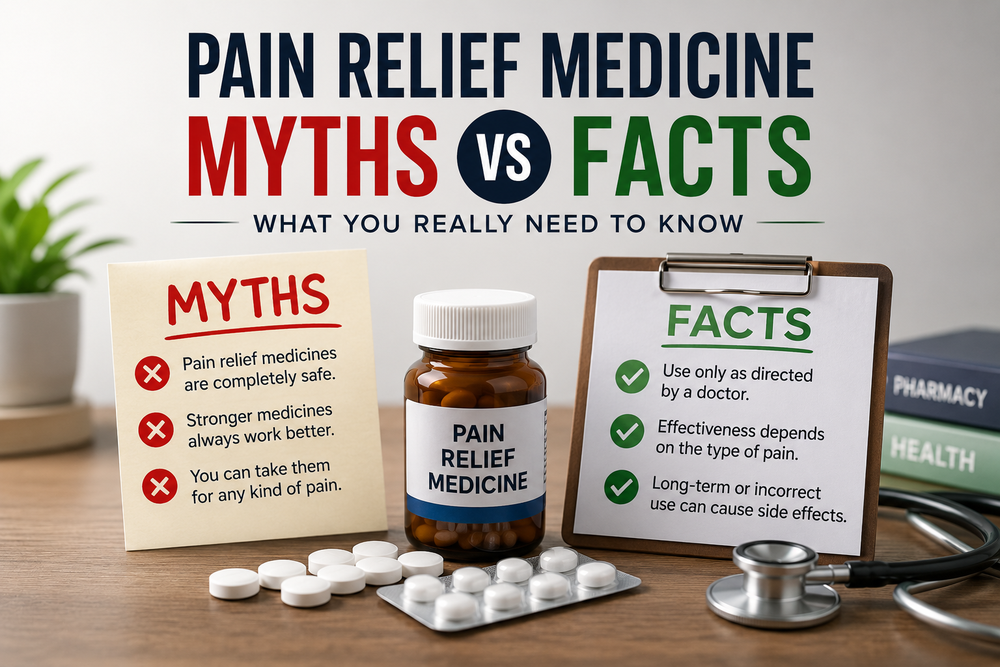
Pain is one of those things almost all of us deal with at some point, like a pulsing headache, sore stiff muscles after a workout, joint pain that shows up again when the weather drops, or that annoying backache from sitting too long at a desk. So, people naturally go for pain relief medicine right away, and honestly that makes sense. But there’s this huge stack of myths around it, some of them confusing, and they don’t really help. One group will swear painkillers are basically always dangerous, and another group acts like taking a pill is a totally harmless, daily routine. The real truth is kind of in the middle. And because so many people now decide to buy Aspirin Online because it’s quicker and easier, it’s even more important to separate what’s true from what’s just noise, so you can make choices that actually support your health. In this blog we’re going to walk through the most common misconceptions about pain relief medicine, then swap them for practical, real-world facts.
Here Are Some Common Myths and Facts
Myth 1: All Pain Relief Medicines Are the Same
Fact: Nope, not even close. Pain relief medicine comes in different forms, and each one is made for different situations. A Pain Relief Tablet can be ideal for quick, short-term relief for headaches or small aches. At the same time Pain Relief Capsules are often built for a slower, longer-lasting effect, so they can work better for chronic or ongoing pain. Also, the medicines vary by active ingredient, some target inflammation, some help block pain signals, and some do both. So, picking the right one depends on the kind of pain you have, plus how strong it feels, not just grabbing what’s easiest to find.
Myth 2: Stronger Medicine Always Means Faster Relief
Fact: Stronger usually doesn’t mean faster, or even better, for your specific pain. A bigger dose doesn’t automatically speed things up—it often just increases the odds of side effects. Mild to moderate pain often does fine with a standard-dose tablet, while stronger options are usually saved for tougher or more specific conditions. If you try to push more than needed just “to feel better sooner,” you can end up putting extra strain on your liver, kidneys, or even your stomach lining over time.
Myth 3: Painkillers Are Only Needed When Pain Becomes Unbearable
Fact: Waiting until it hurts so much you can barely function can turn the whole thing into a bigger problem. Many pain relief medicines work best when taken early, because they help stop the pain signal from getting bigger and building up. This is especially true for inflammatory pain, where early action can help reduce swelling before it really escalates. Reliable platforms make it easier to access genuine Pain Relief Medicine for sale without leaving the house, which can be especially helpful during those painful flare-ups when comfort and speed really matter.
Myth 4: Natural Remedies Always Work Better Than Medicine
Fact: Natural methods like heat therapy, stretching, or herbal teas can absolutely support pain management, but they aren’t always enough for moderate to severe pain. Pain relief medicine that’s been clinically tested goes through serious research on effectiveness and safety when used the right way. If you rely only on natural remedies for things like arthritis, or post-surgery pain, you might end up delaying proper relief and recovery.
Myth 5: You Can Take Pain Relief Medicine Indefinitely Without Issues
Fact: Long-term or excessive use of basically any pain relief medicine—even common over-the-counter choices—can cause issues such as stomach ulcers, liver stress, or dependency with some types. The basic guideline is to stick to the recommended dose, and if the pain keeps going beyond a few days, it’s smart to ask a healthcare professional for guidance.
Myth 6: Buying Medicine Online Is Unsafe or Unreliable
Fact: That belief is pretty outdated now. With verified pharmacies and the right regulatory checks, it’s now fairly safe and convenient to buy Naproxen online, or order other pain relief essentials from home. Many online platforms also show clear product info, dosage guidance, and quality-checked medicine, which saves you the trip to a physical store—especially when you’re dealing with a flare-up and moving around feels miserable.
Myth 7: Cheaper Medicine Means Lower Quality
Fact: Price doesn’t always match quality. A lot of affordable generic pain relief options contain the same active ingredients as branded versions, and they’re usually just as effective. When you order Pain Relief Medicine online from a reputable source, you can often find choices that cost less while still keeping safety and results in place.
Myth 8: You Don’t Need to Read the Label If You’ve Used It Before
Fact: Formulas change, and so does your health situation. Always re-check the dosage instructions, expiry dates, and whether it might interact with any other medicines you’re taking—even if you used that product before.
Making the Right Choice
Clearing up these myths vs. facts helps you handle pain in a smarter, safer way. Whether it’s a mild headache or recurring discomfort in your joints, picking the right pain relief medicine—and using it responsibly—can genuinely make a difference. And if your pain lasts longer than a few days, gets worse, or comes with other symptoms, it’s best to talk to a doctor or pharmacist before you keep using anything. If you’re trying to find something dependable, you can Buy Pain Relief Medicine online in just a few clicks, comparing tablets, capsules, and dosages to match what you actually need. Reliable platforms make it easier to access genuine Pain Relief Medicine for sale without leaving the house, which can be especially helpful during those painful flare-ups when comfort and speed really matter. If you’d like a place to browse and explore, dreamlandpharmacy.com offers a convenient way to reach pain relief essentials online, with clear product details to support better decision-making. And as always, for prescription-strength medicines, please check with your healthcare provider before purchase.
Frequently Asked Questions (FAQs)
1. What’s the difference between a pain reliever tablet and a capsule?
In general, tablets tend to dissolve and get absorbed sooner so it feels like more immediate relief. Capsules are often made for slow, steady release, so they sort of last longer, which is pretty handy when you’re dealing with ongoing pain care
2. Is it safe to buy pain relief medicine online?
Yes, it can be safe, but only if you purchase from a trusted and verified online pharmacy. They should show proper product details and there should be a real quality assurance, not just some blurry store listing with vague info
3. Can I take pain relief medicine on an empty stomach?
It depends on what the formulation does. Some products feel better with food, so you avoid irritation, but not always. Check the label first, or ask a pharmacist, because every option behaves differently
4. How do I know which pain relief medicine fits my condition?
Mostly it’s about the type of pain, and how strong it is. If your pain is stubborn, or severe, it’s better to speak to a healthcare professional before you pick something, even if it looks similar to what you used before
5. Are generic pain relief medicines truly as effective as branded ones?
Most of the time, yes. Generic versions typically use the same active ingredients, so they’re generally just as effective, and they often cost less to
6. Can I combine different pain relief medicines?
It’s not really a good idea without professional advice. Putting pain medicines together can increase the chances of side effects and unexpected interactions. So it’s safer to consult a doctor first, before you combine anything at all
7. How fast will pain relief medicine start working?
That depends on the formulation. Many tablets kick in quicker, while extended-release capsules may take a little longer, but then they can cover you for longer
8. Is long-term use of pain relief medicine safe?
Not without medical supervision. If you keep using certain pain medicines for too long, you may end up with unwanted effects. So follow the recommended directions carefully, and if it’s chronic pain, it’s wise to consult a professional