
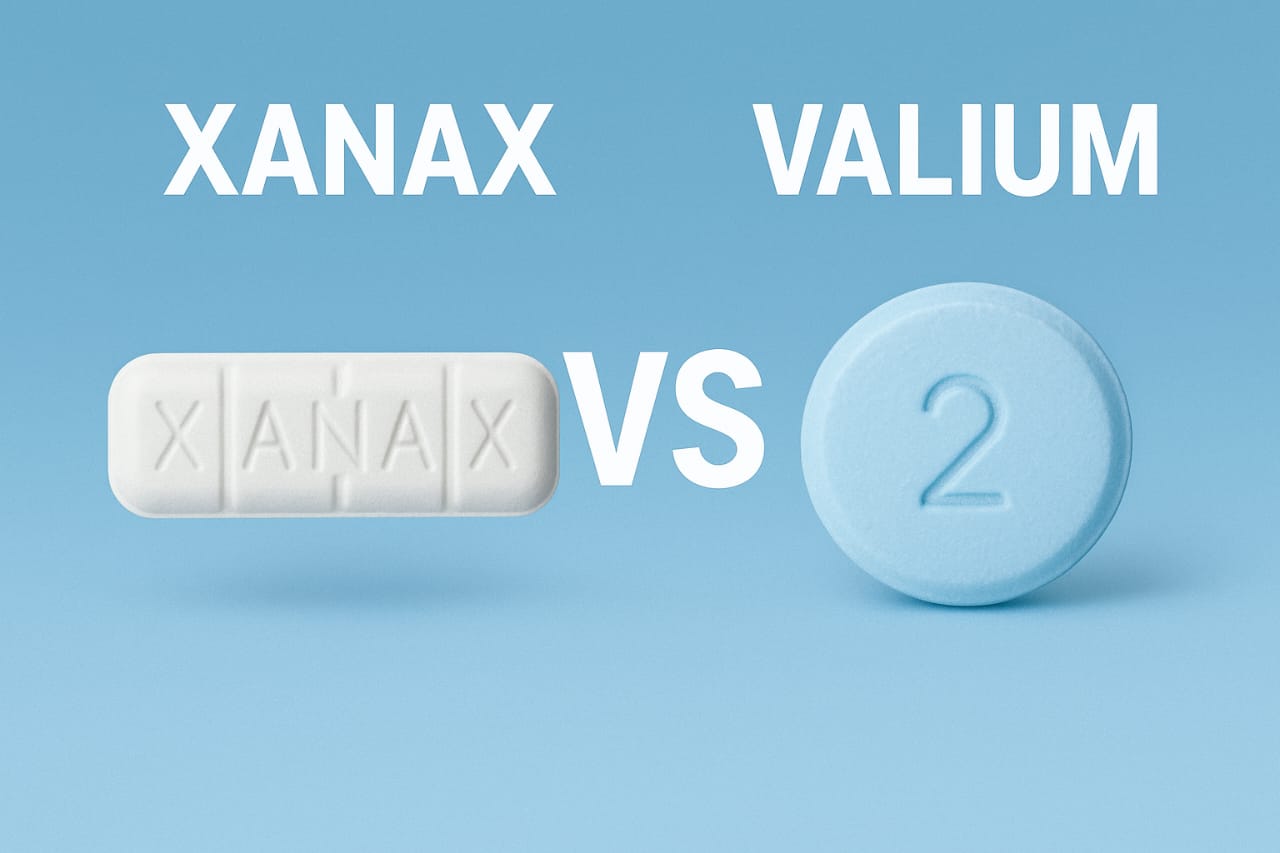
Xanax vs Valium: Which Is the Right Medication for You?
Xanax vs Valium are two common drugs that doctors prescribe to help people deal with anxiety, panic attacks, and other related disorders. If your doctor has suggested Xanax (alprazolam) or Valium (diazepam) as treatment options, you may be wondering: What is the difference between the two, and which is right for me? Both are benzodiazepines, which are a class of central nervous system-acting medications, but they are entirely unique in terms of onset of action, duration of action, conditions treated, and risk profile.
Our licensed pharmacists created this guide to break down everything you need to know about Xanax vs. Valium so you can have a more informed discussion with your healthcare provider.
Important: This article is for educational purposes alone. Never start, stop, or change medications without talking to your prescribing doctor or pharmacist. Xanax and Valium are Schedule IV controlled substances that need a valid prescription.
What is Xanax?
Xanax is the brand name of alprazolam, a short-acting benzodiazepine that is approved by the FDA for the treatment of generalized anxiety disorder (GAD) and panic disorder. It is one of the most commonly prescribed psychiatric medications in the US.
What is Xanax Used For?
Doctors often give blue Xanax pills to people who are having anxiety or panic attacks for a short time. Because it could make you dependent, it is not usually recommended for long-term use.
How long does Xanax take to kick in?
Generally, the effects of Xanax begin working in 15 to 60 minutes. The blue Xanax is a fast-acting benzodiazepine that quickly affects the central nervous system, giving people instant relief from anxiety symptoms.
Xanax Dosages
Xanax is available in various doses, including 0.25 mg, 0.5 mg, 1 mg Xanax, Xanax 2 mg, 3 mg Xanax, and 4 mg Xanax bars, depending on the severity of the condition.
What is Valium?
Valium is the brand name for diazepam, a long-acting benzodiazepine with a wider range of approved uses. Besides anxiety , Valium is also used for muscle spasms , alcohol withdrawal symptoms, and as an adjunct treatment for some types of seizures.
Valium Uses
Valium is a drug that helps with anxiety, muscle relaxation, and controlling seizures. It is also used to calm people down before surgery.
How it Works
Valium works in a similar way to Xanax by increasing GABA, but it takes longer to start working and lasts longer, improving it for long-term use.
Valium Dosage
Valium is commonly available in 2 mg, 5 mg, and 10 mg tablets, depending on the intended purpose of treatment.
How Do They Work?
Both medications enhance the activity of gamma-aminobutyric acid (GABA), a neurotransmitter in the brain that produces a calming effect on the nervous system. By boosting GABA activity, benzodiazepines reduce feelings of anxiety, tension, and agitation. The key difference lies in how quickly they act and how long the effects last.
Xanax vs. Valium: Side-by-Side Comparison
|
Feature |
Xanax (Alprazolam) |
Valium (Diazepam) |
|
Drug Class |
Benzodiazepine (short-acting) |
Benzodiazepine (long-acting) |
|
FDA-Approved Uses |
Anxiety, Panic Disorder |
Anxiety, Alcohol Withdrawal, Muscle Spasms, Seizures |
|
Onset of Action |
15–30 minutes |
15–60 minutes |
|
Duration |
4–6 hours |
Up to 20–100 hours (long half-life) |
|
Half-Life |
6–27 hours |
20–100 hours |
|
Potency |
Higher (more potent per mg) |
Lower (larger doses needed for equivalent effect) |
|
Addiction Risk |
Higher (faster-acting, shorter duration) |
Lower (slower onset reduces abuse potential) |
Key Differences Explained
1. Onset and Duration
The key difference between Xanax and Valium is the speed of action and the length of stay in your system. Xanax works quite quickly, within 15 to 30 minutes, which may be helpful for anxiety or panic episodes requiring rapid relief. But its impact lasts just for 4 to 6 hours, and some patients must take it numerous times a day.
Valium can take a bit longer to kick in (up to 60 mins), but it has a lengthy half-life, so it could be active in the body for 20 to 100 hours. This makes Valium a superior choice for conditions that require ongoing, around-the-clock alleviation of anxiety.
2. Approved Medical Uses
While both treat anxiety, Valium has a wider range of approved indications:
- Anxiety disorders (both medications)
- Panic disorder: Xanax is specifically approved; Valium is sometimes used off-label
- Alcohol withdrawal: Valium is commonly used to manage withdrawal symptoms and reduce seizure risk
- Muscle spasms: Valium's muscle-relaxant properties make it useful here
- Seizure disorders: Valium is used as an adjunct treatment
3. Potency
Xanax is said to be a lot stronger per milligram than Valium. A smaller dose of Xanax has the same effects as a much higher amount of Valium. Average Xanax doses range from .25 to .5 mg, while average Valium doses range from 2 to 10 mg.
4. Addiction and Dependence Risk
Both medications carry a risk of physical dependence and addiction; this risk is clearly stated in their FDA black box warning. However, Xanax is generally considered to have a higher potential for abuse due to its faster onset and more intense short-term effects. The brain adapts quickly to Xanax's rapid peaks, which can reinforce repeated use.
Valium's slower onset and gradual, prolonged action mean the reward response is less intense, making it slightly less prone to misuse, though it is still a controlled substance and should always be used exactly as prescribed.
5. Withdrawal
It also has a shorter half-life; therefore, withdrawal symptoms tend to set in more quickly and more acutely, sometimes within hours of the last dose. Symptoms may include rebound anxiety, panic episodes, sleeplessness, and, in severe situations, seizures.
Valium withdrawal tends to be slower because of its longer half-life. This is one reason that doctors sometimes use Valium itself to assist patients in transitioning off other benzodiazepines. Do not stop either medicine suddenly without medical advice.
Side Effects: What to Expect
Both Xanax and Valium share many of the same side effects. Common ones include:
- Drowsiness and sedation
- Dizziness or lightheadedness
- Impaired coordination and balance
- Memory problems or confusion
- Mood changes, including depression or irritability
Xanax causes increased sedation. This effect is especially true for those with panic anxiety. Both can harm your driving ability, and you should never take them with alcohol, opioids, or other CNS depressants.
Who Should Avoid These Medications?
Your doctor may advise against or closely monitor the use of these medications if you have:
- A history of substance use disorder or addiction
- Breathing problems (e.g., sleep apnea, COPD)
- Liver disease: both drugs are processed by the liver
- Depression or suicidal thoughts
- Pregnancy: benzodiazepines carry fetal risk
- Are elderly people at increased risk of falls and cognitive impairment?
In conclusion, Xanax and Valium are both effective drugs for treating anxiety and other problems, although they have different characteristics. If you need relief right now, Xanax is a better option. If you need ongoing management, Valium may be a better fit. Whatever drug you pick, be careful to speak with your healthcare professional to be sure it’s the right one for you.
Frequently Asked Questions (FAQ)
Which is stronger: Xanax or Valium?
Xanax is typically stronger on a milligram-by-milligram basis, but Valium lasts longer in the system.
How long does it take for Xanax and Valium to work?
Xanax works within 15 to 30 minutes, while Valium takes about 1 to 2 hours to reach peak effectiveness.
Where can I order Valium online?
You can order Valium online from pharmacies that are licensed and require a prescription. Read more about it in Buy Valium Online—A complete, safety-focused guide for informed patients. To avoid getting fake drugs, it's important to make sure you're buying from a reliable and trustworthy source. Before you buy Valium online, always talk to your doctor or healthcare provider to make sure it's the right medicine for you.
Is a Valium pill like a Xanax?
Valium and Xanax are both benzodiazepines, which means they are in the same class of drugs and have similar effects, like helping to ease anxiety. But they are not the same. Valium stays in the body longer and has a longer half-life, which makes it particularly effective for treating anxiety and other conditions over the long term. Xanax, on the other hand, works faster and is better for short-term relief of anxiety or panic attacks.
What is Valium used for?
Valium is mostly used to treat muscle spasms, anxiety disorders, and seizure disorders. People also often use it as a sedative before medical procedures or surgeries. Valium works by slowing down the central nervous system, which has a calming effect that helps lower anxiety and relax muscles.
Is Xanax a narcotic?
No, Xanax is not a narcotic. It is a benzodiazepine drug that you can only get with a prescription. "Narcotics" usually means opioid drugs, which are drugs that help with pain. Xanax, on the other hand, is used to treat anxiety, panic attacks, and other similar problems. Xanax is not a narcotic, but it can be addictive, so take it only with a doctor's advice.